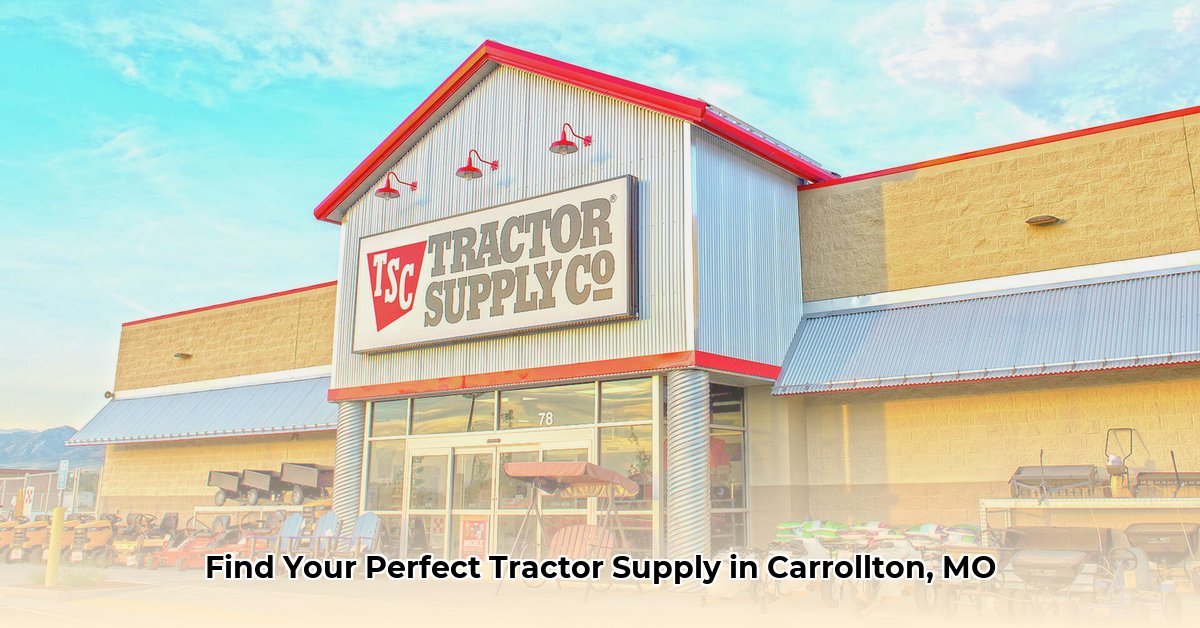
Finding the right supplies for your farm or garden in Carrollton, Missouri, can be a challenge. Tractor Supply Company (TSC) provides a readily available resource, but its role in promoting sustainable agriculture deserves closer examination. This article explores TSC's offerings, their potential for advancing sustainable practices, areas needing improvement, and the broader context of sustainable agriculture in Missouri. For a similar store in a nearby town, check out this Kirksville Tractor Supply.
Tractor Supply Carrollton, Missouri: A Local Resource for Sustainable Practices?
Tractor Supply's presence in Carrollton, Missouri, offers local farmers and gardeners convenient access to a wide range of products. But how does this accessibility translate to a commitment to sustainable agriculture? The answer is nuanced, revealing both opportunities and challenges within the current system.
Essential Supplies for Sustainable Farming and Gardening
TSC stocks a vast inventory of items relevant to sustainable agriculture. Organic seeds, natural pest control options, water-efficient irrigation systems, and durable tools – all contribute to environmentally conscious farming practices. This accessibility is vital for both large-scale and small-scale operations. Consider, for instance, the ease of obtaining compost, cover crops, and fencing materials—all essential components of environmentally friendly agriculture. This readily available access empowers individuals to pursue sustainable practices, whether they're seasoned farmers or enthusiastic home gardeners.
Tractor Supply's Influence on Sustainable Agriculture: A Double-Edged Sword
While TSC doesn't explicitly brand itself a sustainability leader, its impact is undeniable. The quality and source of livestock feed, for example, directly affect the environmental footprint of animal agriculture. Likewise, the availability of tools and materials for water conservation and pest management contributes to more sustainable farming methods. However, a significant limitation is the lack of widespread transparency regarding the sourcing and production of its products. This lack of clarity makes it difficult for consumers to make truly informed decisions about sustainability. How can we ensure that the feed we buy isn't contributing to unsustainable practices? This lack of information presents a potential barrier to widespread adoption of sustainable practices.
Enhancing TSC's Contribution to Sustainable Agriculture: Three Key Steps
Tractor Supply could significantly strengthen its commitment to sustainability through several strategic improvements:
Increased Transparency: Detailed product labels specifying the origin of materials, their environmental impact (e.g., carbon footprint, water usage), and any relevant sustainability certifications would dramatically increase consumer confidence in making informed choices.
Promoting Sustainable Product Lines: Dedicate shelf space and marketing efforts to showcasing sustainably sourced products. This could involve partnerships with local organic farms and suppliers, emphasizing products with verifiable certifications.
Educational Initiatives: Offering workshops, online resources, or collaborations with local agricultural experts on sustainable farming techniques would empower consumers and farmers alike. These resources could cover diverse topics such as water conservation, soil health, and integrated pest management.
The Power of Consumer and Farmer Choices: A Shared Responsibility
Sustainable agriculture hinges on a collaborative effort involving farmers and consumers. Farmers play a critical role by adopting practices like crop rotation, water conservation, and natural pest control. Simultaneously, consumers drive demand by actively seeking out sustainably produced goods—products that reflect a commitment to environmental stewardship. The choices we make send a clear message to companies like Tractor Supply, pushing them to prioritize sustainability.
Sustainable Agriculture in Missouri: A Broader Perspective
Missouri's agricultural landscape is diverse, and TSC serves a crucial role in this ecosystem, providing access to resources for both large and small-scale operations. However, the goal of sustainable agriculture in Missouri requires a collective effort involving businesses, farmers, consumers, and policymakers. It's a continuous dialogue, and Tractor Supply is undeniably one significant participant in this larger conversation about the future of agriculture.
How to Source Sustainable Farm Supplies from Tractor Supply Co: A Practical Guide
Navigating the world of sustainable farming supplies can be challenging. Let's explore how to make informed decisions when sourcing materials from Tractor Supply in Carrollton, MO.
Identifying Sustainable Products at TSC
While TSC doesn't always clearly label sustainable products, several strategies can help you make informed choices:
Look for Certifications: Familiarize yourself with relevant certifications like USDA Organic, Fair Trade, and others specific to agricultural products. These certifications provide some level of assurance regarding sustainable practices.
Ask Questions: Don't hesitate to ask TSC employees about the sourcing and origin of products. Their knowledge, while possibly limited, can still offer insights.
Research Independently: Utilize online resources to independently verify the sustainability claims of products before purchasing.
Prioritize Local: Whenever possible, opt for locally sourced products. This reduces transportation emissions and supports local farmers.
Beyond TSC: Expanding Your Sustainable Sourcing Network
Consider supplementing your TSC purchases with supplies from local farmers markets, co-ops, and community-supported agriculture (CSA) programs. This diversifies your sources and helps build a more resilient local food system.
Conclusion: A Path Towards Sustainable Agriculture in Missouri
Tractor Supply plays a significant, albeit indirect, role in the ongoing quest for sustainable agriculture in Missouri. By promoting transparency, championing sustainable products, and fostering educational initiatives, TSC can significantly enhance its positive impact. Ultimately, however, the responsibility for building a sustainable agricultural future rests with all stakeholders—from businesses like Tractor Supply to the farmers who produce our food and consumers who make the purchasing decisions. This collaboration is critical for ensuring a healthy and sustainable agricultural future for Missouri.